
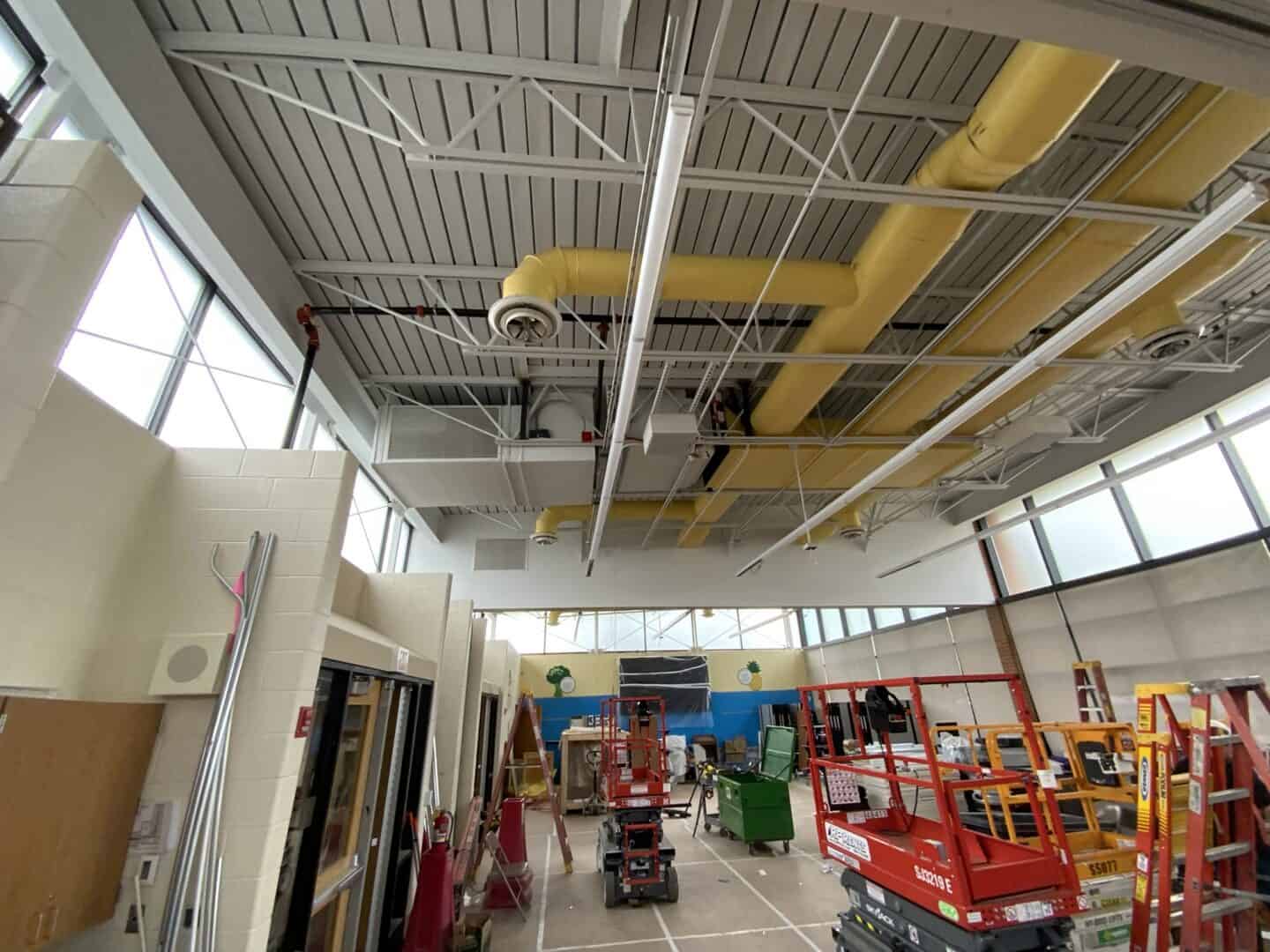
At Reed Construction, we understand that a successful school environment extends well beyond the classroom. Effective teachers, strong curriculum, and modern technology all shape student success — but so does the physical space they learn in. We saw this firsthand as general contractor on an $8.4 million project replacing the HVAC systems at Sieden Prairie and Neil Armstrong Elementary in Matteson, Illinois, for School District 159.
Students and staff spend a remarkable amount of time inside school facilities — a typical U.S. student logs 8,884 hours in school from kindergarten through 8th grade, according to EducationWeek. Creating a comfortable, healthy learning environment means maintaining consistent temperatures, good ventilation, and clean indoor air. A well-designed, properly maintained HVAC system is essential to achieving that, helping students stay focused and engaged.
Investing in HVAC as a Long-Term Savings Strategy
For school systems, a high-quality HVAC system is more than a comfort investment — it’s a long-term savings strategy. Upgrading equipment requires upfront cost, but improved energy efficiency, lower maintenance costs, and fewer unexpected repairs reduce operating expenses over the system’s lifetime.
Older systems consume more energy and break down more often, driving up utility and maintenance costs. Modern, efficient systems paired with proper controls and preventive maintenance extend equipment life and improve cost predictability. The EPA notes that these efficiencies lower utility bills directly, and that healthier indoor environments can bring money into a school by reducing absenteeism and increasing funding tied to Average Daily Attendance.
The need is widespread. neaToday reported that a June 2020 Government Accountability Office study found 41 percent of public school districts need to replace or update HVAC systems in at least half their buildings — roughly 36,000 schools nationwide.
At Reed Construction, we encourage school districts to look past the initial price tag and evaluate the total lifecycle cost of an HVAC system. The right equipment, properly maintained, reduces operating costs, minimizes surprise repairs, and delivers value well beyond installation day.
Every School Requires a Different HVAC Design
Effective HVAC design starts with understanding how each school actually functions. Classrooms, gyms, laboratories, and cafeterias all have different heating, cooling, and ventilation needs — a standardized approach doesn’t work. HVAC design should be integrated into the broader building strategy, planned around occupancy, airflow, comfort, energy performance, and long-term reliability.
Existing schools add another layer of complexity: upgrades have to be planned carefully to minimize disruption to students and staff while improving performance. A well-designed system delivers consistent comfort, healthy indoor air quality, and efficient operation — day after day.
Where We’ve Made an Impact
Building better places to learn starts with creating environments that support both the people and the purpose of each space. That’s exactly what guided our work with School District 159 at Sieden Prairie and Neil Armstrong Elementary, an $8.4 million, multi-phase project delivered as general contractor alongside architect Tria Architecture.
We were selected because we understand that schools are more than buildings — they’re places where students learn and teachers inspire. The scope went well beyond HVAC: full removal and replacement of the existing HVAC systems, integration of a Honeywell building automation system for long-term efficiency and control, new ceilings and lighting throughout both buildings, a complete fire protection system with new sprinklers, and a water line upgrade — delivered in phases to minimize disruption to students and staff.
Facing an aging HVAC system in your district? Let’s talk about what a lifecycle-focused upgrade could look like for your schools.
Sources:
1. EducationWeek — U.S. Teachers and Students Are Tops for Time Spent in School
2. U.S. Environmental Protection Agency — Indoor Air Quality Design Tools for Schools
3. neaToday — It’s Getting Hot in Here: Without Air Conditioning, Students and Staff Suffer